

One of my favorite spots at the museum is the blacksmith shop. Period interpreters are in several buildings throughout the museum, but for some reason the blacksmith shop feels more alive to me. You can smell the burning coal and hear the whoosh of the bellows as the blacksmith feeds oxygen to the fire. There is always something being made here, and the shop as a whole looks, feels, and smells like a place where heat is used to shape metal.
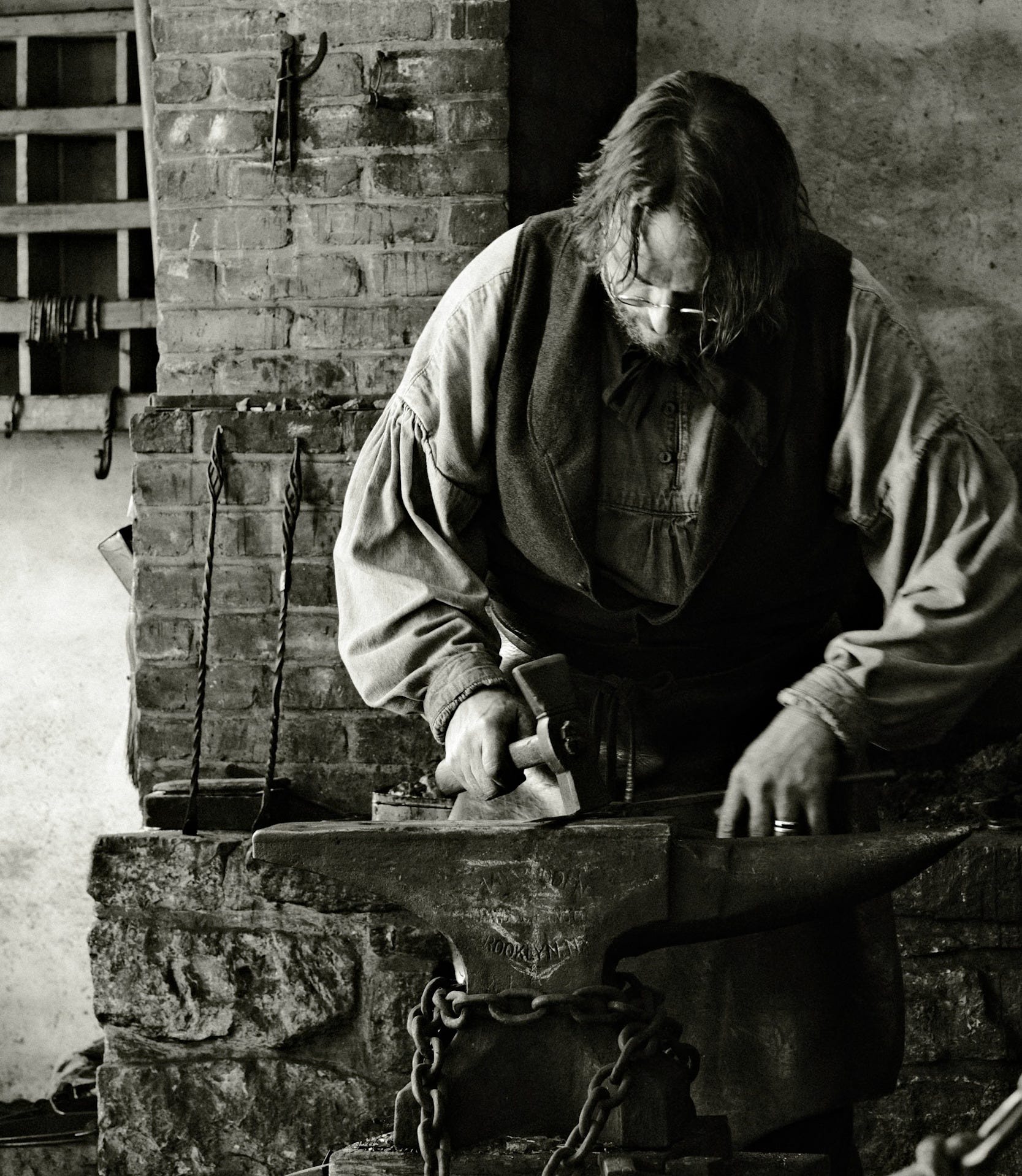
The blacksmith slowly shapes the pieces he’s working on, using a combination of heat and precisely applied force. It takes patience and knowing exactly how hard he can hit the piece to nudge it into shape. It takes concentration to bend the piece just enough, and to feel exactly when it needs to be reheated.
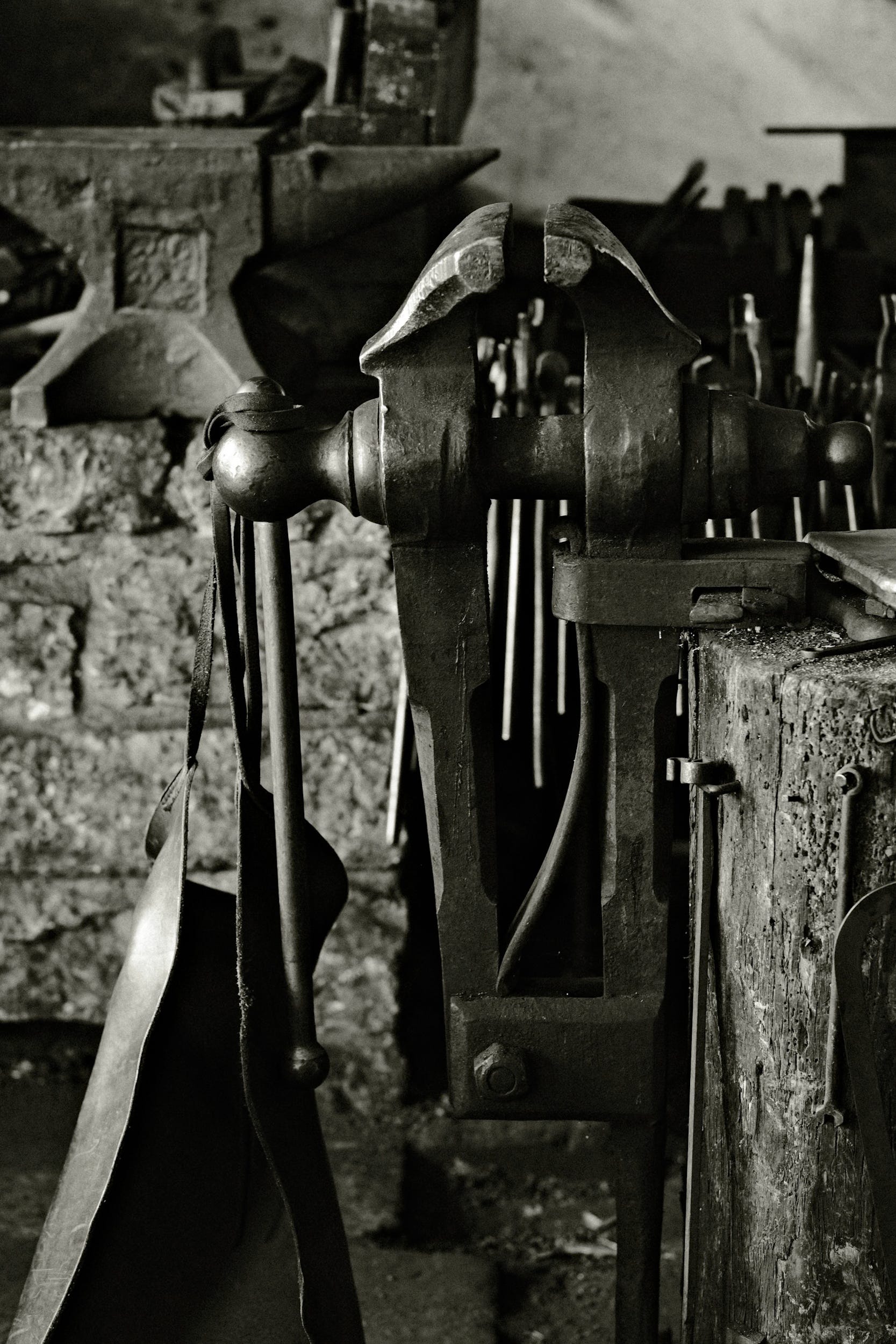
The tools around the shop are ageless. Looking around, you can see smooth surfaces from use, along with just enough patina in places so they don’t look new. Heavy, worn.
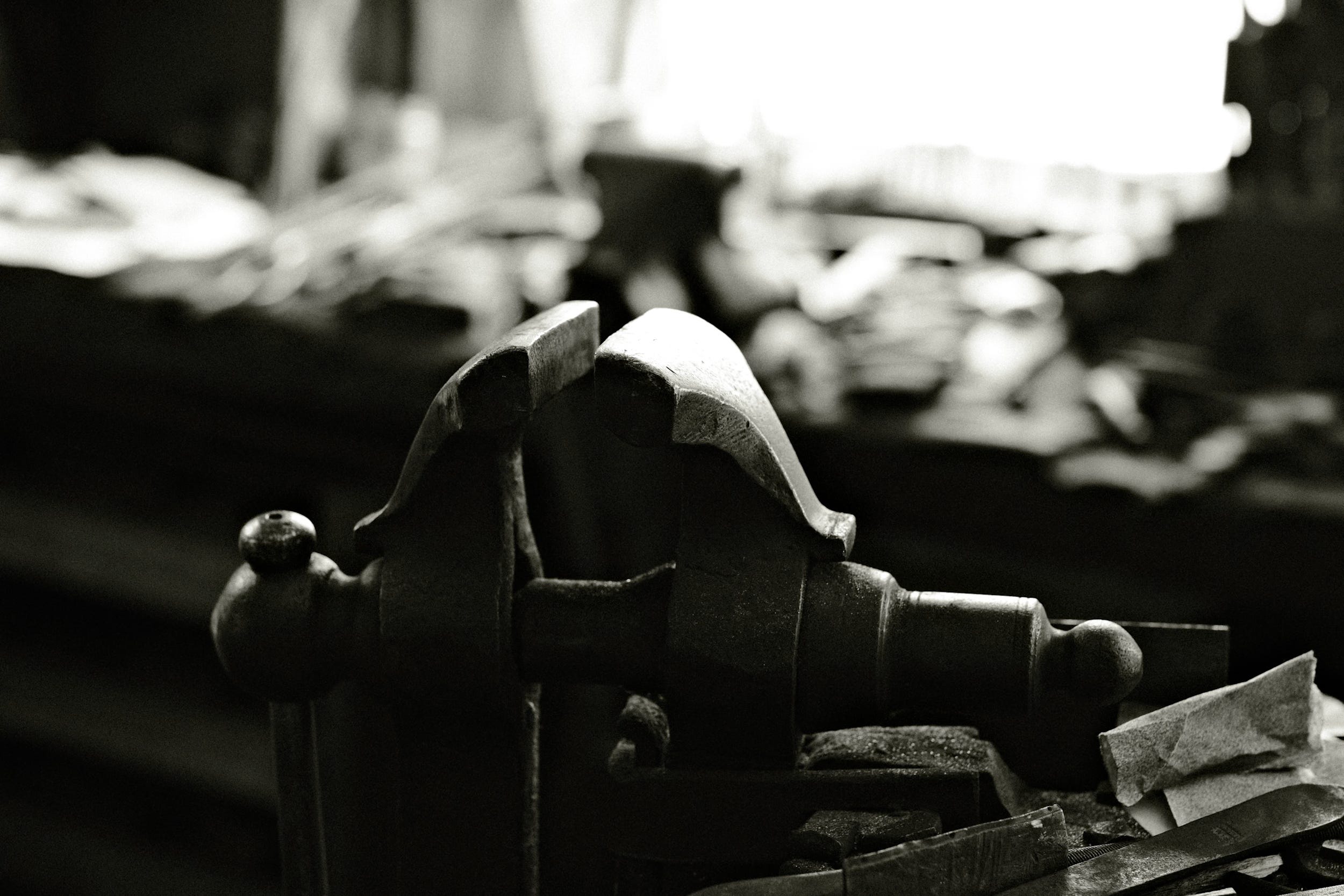
The iron vise that holds items securely and the anvil that hot iron is shaped against by hammer blows are heavy, made of solid iron that has held up through repeated use.
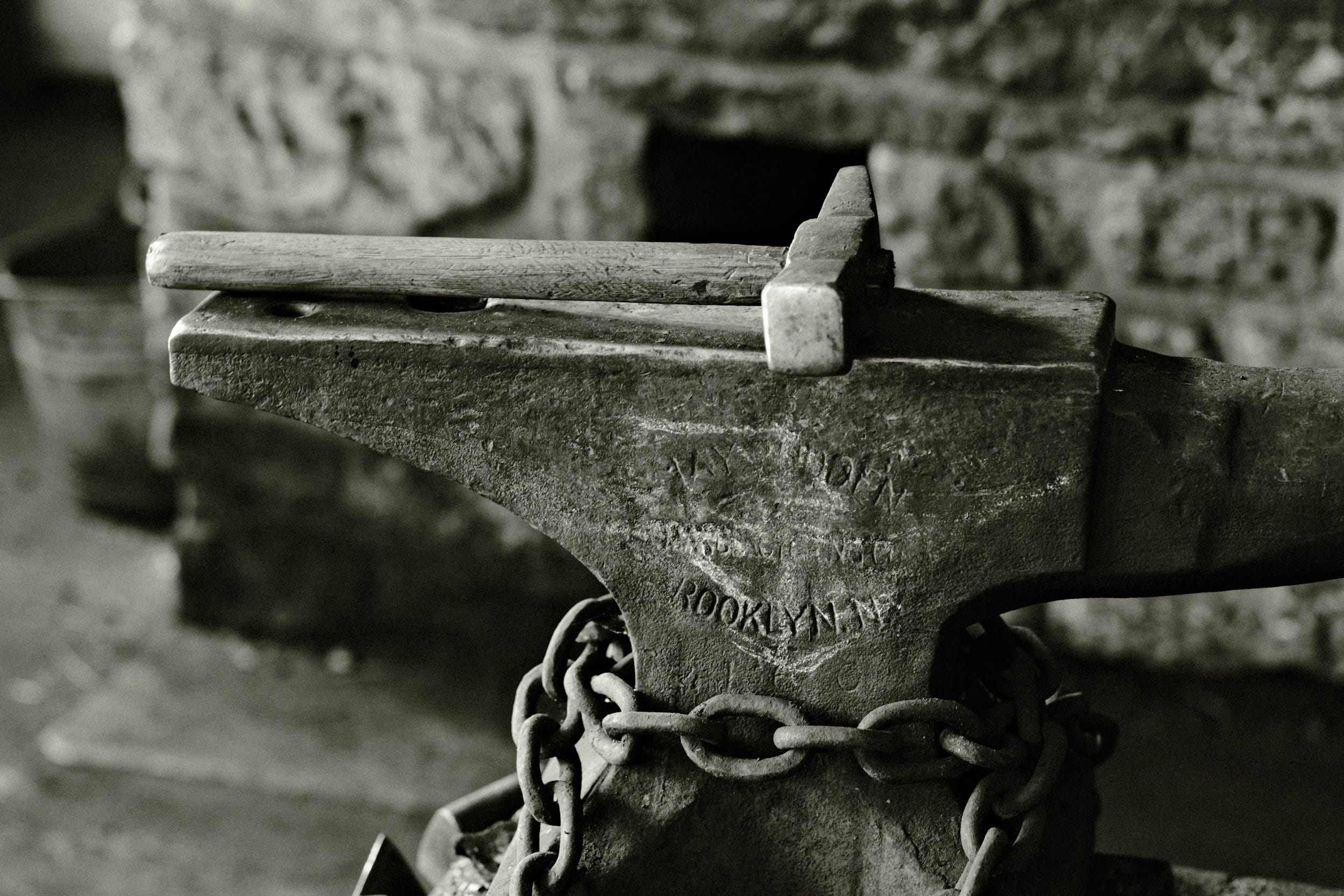
The side of the anvil has details that give away its age. It’s rough, not machined, and has a worn maker’s mark from a company that may no longer exist. It has seen years of hard use.
The tools may be heavy and worn, but what they create is often very different.
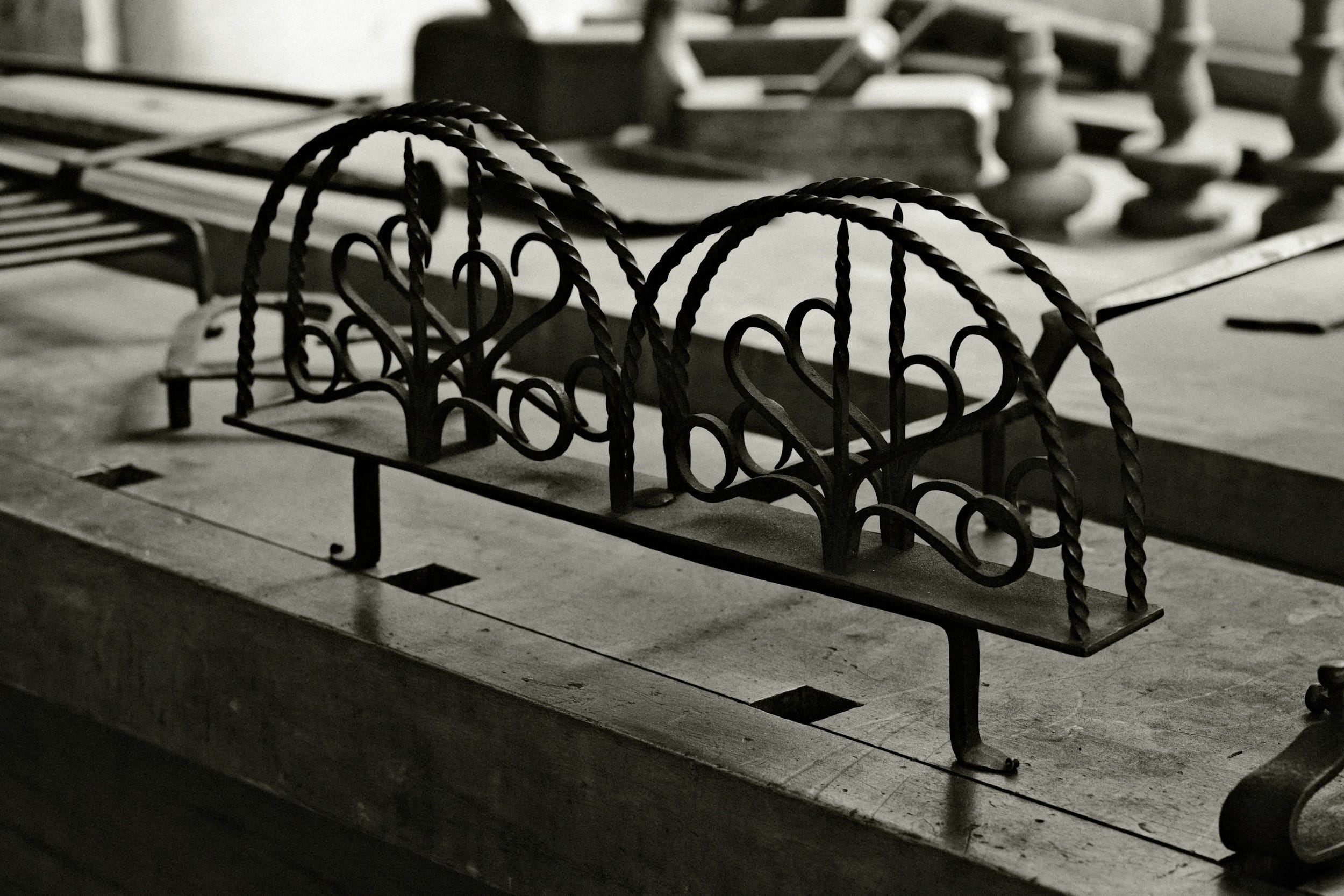
The end products created at the shop can be as simple as an individual nail, or it can be an intricate, almost delicate piece. This bread toaster has been crafted for both looks and function.

✅ Where to Find Me
You can find more of my work on the web at: Simmons Photography
If you want to work with me or inquire about licensing images: Contact Page
More of my work can be seen on Vero and Flickr.