


Story, Feeling, and the Space Between
I’ve always had a hard time wrapping my head around the idea of storytelling in photography.
A photograph is such a simplified medium. It’s a two-dimensional slice of time, compared to a novel or even a one-page essay. Writers can use whole paragraphs to describe a place, a feeling, or a moment of change. In a photograph, you get 1/60th of a second and a rectangle to work with.
So how do you tell a story in that space?
That question has followed me as more and more photographers talk about telling storys with their photos.
As I have worked to create more interesting compositions, it seemed that to go beyond a technically good photograph, to create a compelling image, that I needed to have something to say.
I struggled looking at scenes in the forest, or the rusty and abandonded machinery I sometimes like to photograph, and tried to figure out how to make that into some sort of narrative. What did that leaf, that tree, or that old broken window have to say. Or what did I have to say about it, besides I was here, and this looked interesting.
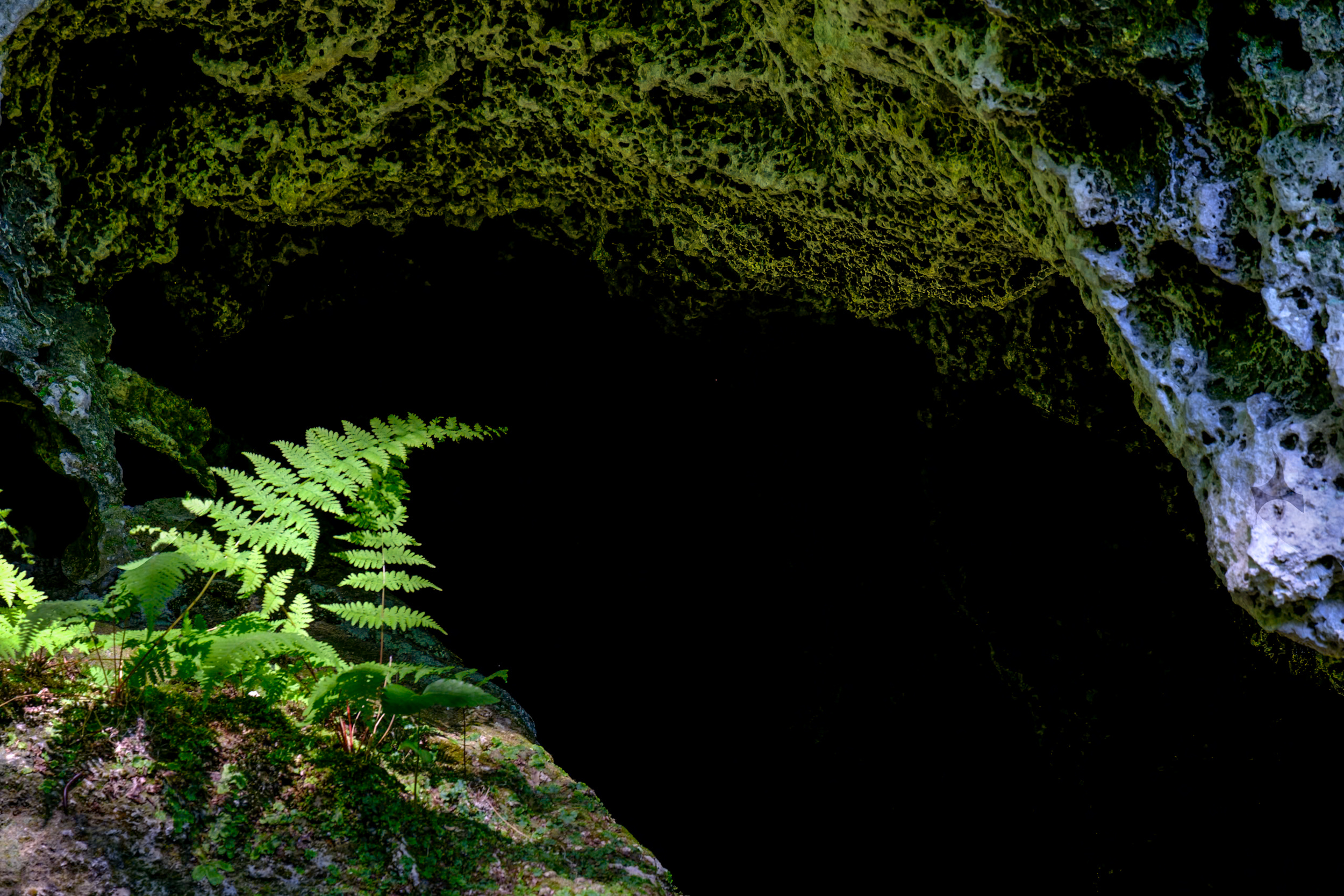
I started to think that maybe I was over-thinking it. Maybe I was using the term “story” too literally. Why was I out there? What was it about a scene that drew me to it? What details did I have to look for to make it more interesting for me? Why did I take the camera out of the bag in the first place?
What was my intention?
And maybe that’s the key.
A story can be a single word
Over time, I began to think of story in simpler terms, not as a sequence, but as a single word or feeling.
Old.
Entropy.
Soft.
Quiet.
That kind of story doesn’t unfold. It rests. It sits quietly inside the frame, waiting for someone to feel it.
One photograph that taught me this was a close-up of an old door knob I made at an old abandonded house. It is worn smooth from years of use, surrounded by weathered wood, cracked paint, and quiet decay

.When I took that photo, I wasn’t thinking about who had lived there or why the building was abandoned. I was drawn to the texture, the weight of time, the echo of touch. The photo isn’t “about” a person or a house.
It’s about old.
That’s the whole story, and that’s enough.
Whose story is it, anyway?
I was walking along Main Street, after baseball had begun winding down. The banners were gone, and the air had that late-autumn stillness that settles in when the crowds disappear.

In one shop window, a planter box full of mums caught my eye. Behind the glass, a sweatshirt and a pair of flannel pajama pants were on display. There was a sign underneath that simply read BASEBALL.
To someone familiar with the town, that one word says baseball. Summer. Crowds. But paired with the flannel and the flowers, it says season’s over. It’s a quiet note of transition.
If you don’t know the town, though, it’s just a storefront. Just fabric, glass, and flowers. It may be just about the colors.
And that’s when I understood something important: once a photograph leaves your hands, the story shifts. The meaning changes depending on who’s looking.
That doesn’t make the image weaker. It makes it alive.
Simple stories and complex ones
Right now, I’m drawn to these simple stories, the ones that live inside a single frame or two.
More complex stories can be told through a series of images, where rhythm, contrast, and sequence start to behave like sentences and paragraphs. But that’s another conversation for another day.
Here, I’m interested in the smallest version of story, the kind that can be carried in a single word, a feeling, or a gesture.
And part of learning to see that way meant learning what not to look for.
I used to walk through a scene trying to find something that wasn’t there, trying to make it fit a story I had already decided I wanted to tell. I’ve learned to stop doing that.
If I stay open long enough, the story usually reveals itself.
A quiet triptych
That Cooperstown window became part of a small group of images from that day. Paired with the image of the storefront, these images of the brightly colored tree along the street, and the pumpkins and other fall decorations, the images lean into the story of the season, and the Cooperstown store front becomes the setting.


Together, they feel like a triptych: three simple moments that echo one another.
Not a plot, not a timeline, just a rhythm.
Each one by itself holds its own small word.
Maybe that’s what photographic storytelling really is.
Not the telling, but the inviting.
Not control, but collaboration.
A photograph might never hold a whole story. But it can start one: a fragment that stirs curiosity, a tone that someone else connects to in their own way.
And maybe that’s enough.
Not a story to tell, but a feeling to share, one that someone else might recognize in themselves.

✅ Where to Find Me
You can find more of my work on the web at: Simmons Photography
If you want to work with me, or inquire about licensing images: Contact Page
More of my work can be seen on Vero and Flickr.
I love this, Bob. You know, when I write my zines, I write prose onto the photos rather than the other way around. I like to do various sorts of exercises beyond that, sometimes to merely jostle the cobwebs. I wonder if a bit of journaling before you shoot, or making a haiku or two after might do miles of work for you. Your shots are good! And it seems like you've got more than enough to piece together things in front of you.